Baltimore's wind exposure comes from more than one direction.
Baltimore commercial roofs see wind damage from several different weather patterns spread across the year rather than a single storm season. Spring and summer bring fast-moving severe thunderstorm lines, some strong enough to produce derecho-type straight-line wind events across the mid-Atlantic corridor. Fall and winter bring nor'easters that can hold sustained wind and gusts over a roof for hours rather than minutes. And in late summer, the remnants of tropical systems occasionally track up the Chesapeake, combining heavy rain with wind loading on top of already-saturated membranes.
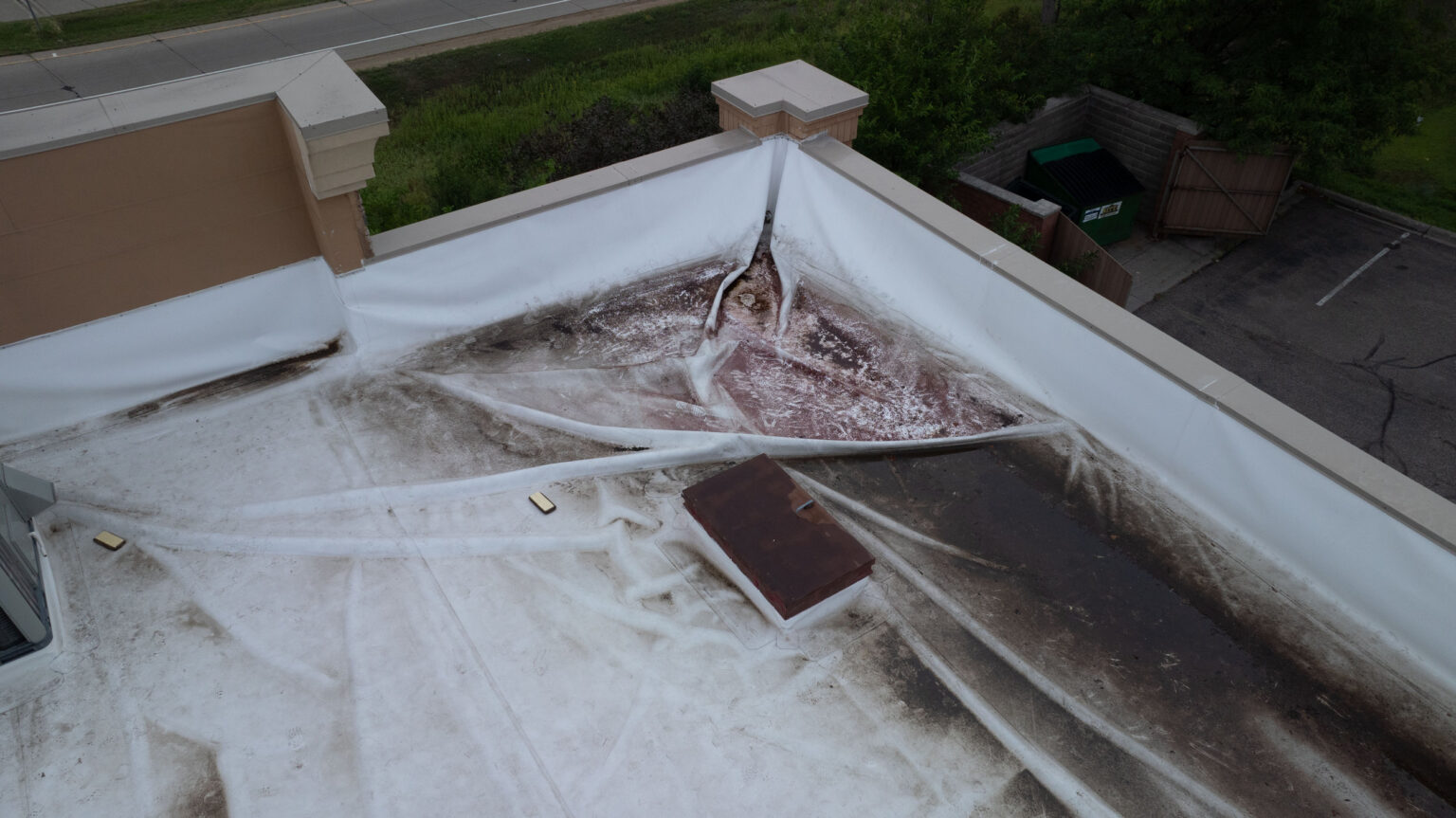
Each of those events stresses a roof differently, but the failure points repeat: membrane uplift starting at the parapet and roof edge, displaced or bent coping and edge metal, torn or creased field membrane where fastening patterns are marginal, scattered ballast on loose-laid systems, and damaged curbs or flashing around rooftop units where wind-driven rain finds a way in. On mechanically fastened systems, uplift often shows as a pattern of creasing that follows the fastener rows rather than random tearing.
Documenting a wind claim means capturing that pattern before it gets patched over. We photograph the perimeter and corner zones first, since those areas typically see the highest wind pressure under current wind-zone design standards, then work inward. We note whether displaced coping or torn membrane lines up with a wind direction consistent with the storm date on record, and we measure how far uplift extends from the edge rather than describing it in general terms.
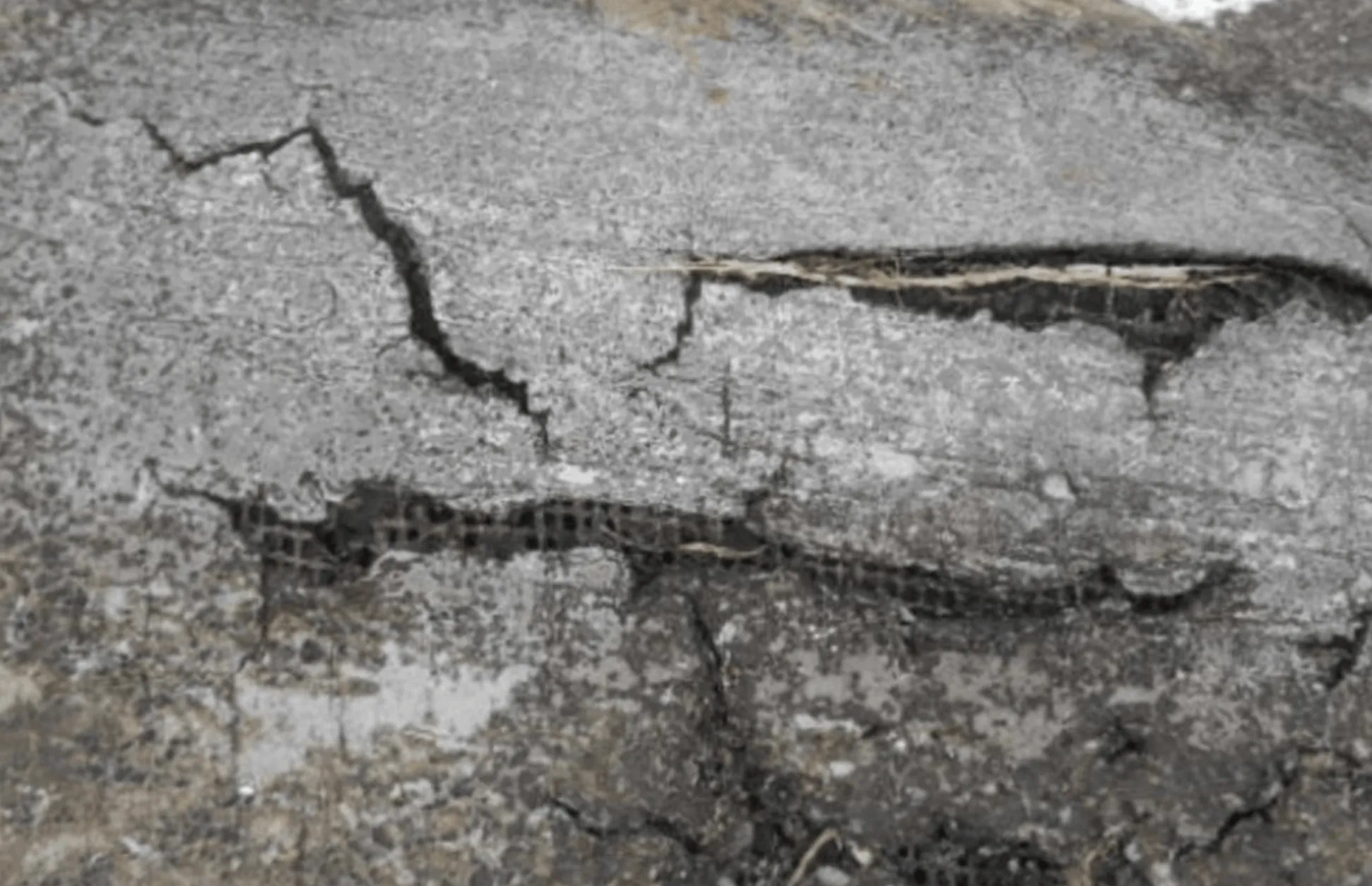
Adjusters sometimes push back on wind claims by framing the damage as pre-existing wear rather than storm loss, particularly on an older membrane. We address that directly: photos of fresh creasing, torn seams with clean edges, and displaced fasteners look different from gradual UV degradation or age-related seam failure, and a file that shows both the damaged and undamaged sections side by side makes that distinction easier to defend.
We are your roofing contractor, not a public adjuster — we document and substantiate the roof damage so you and your adjuster work from an accurate scope.
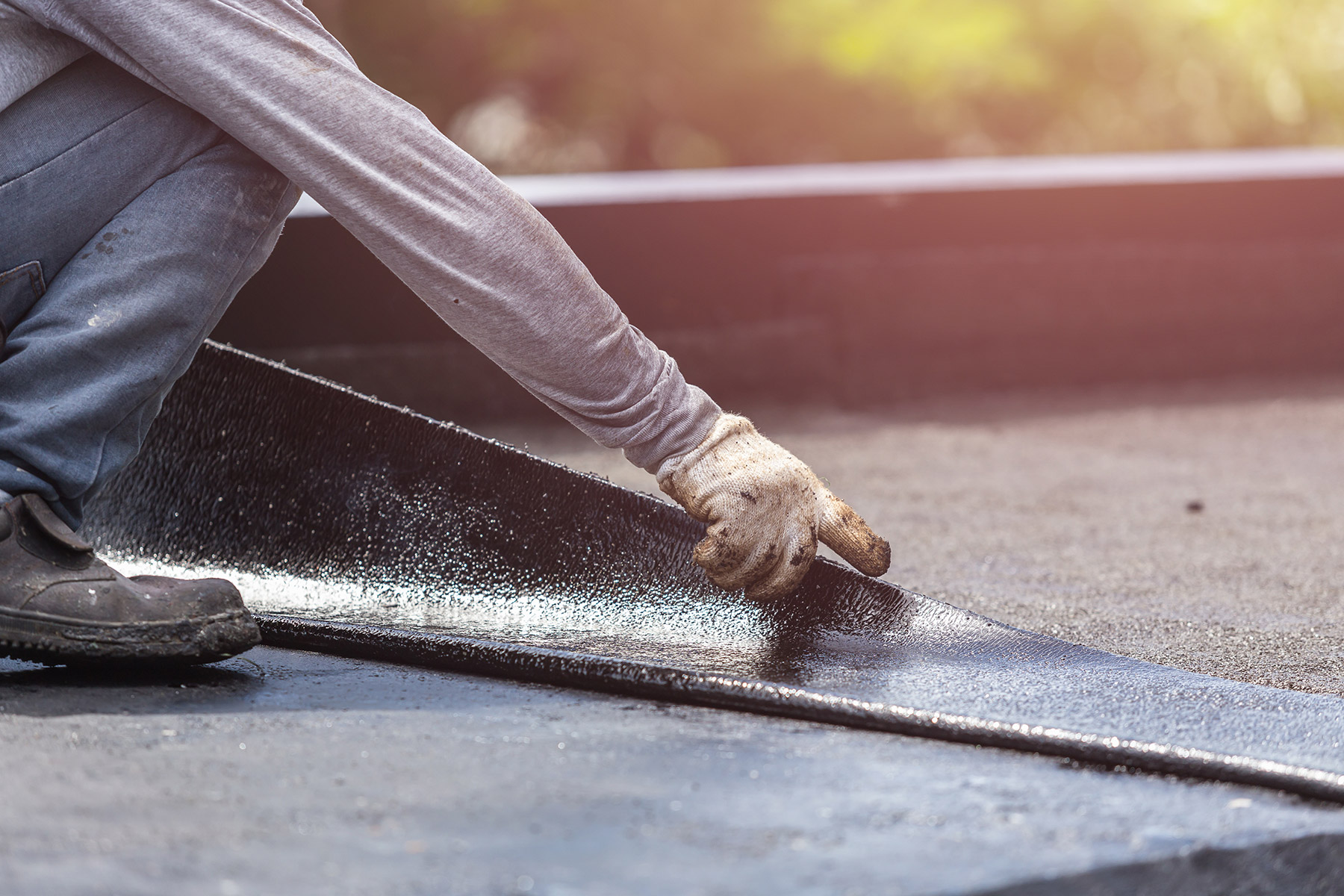
If the roof is actively leaking or membrane is torn open, emergency tarp and dry-in work protects the interior, but we document the damage first wherever it is safe to do so, because covering the roof before photos are taken makes the claim harder to support later.
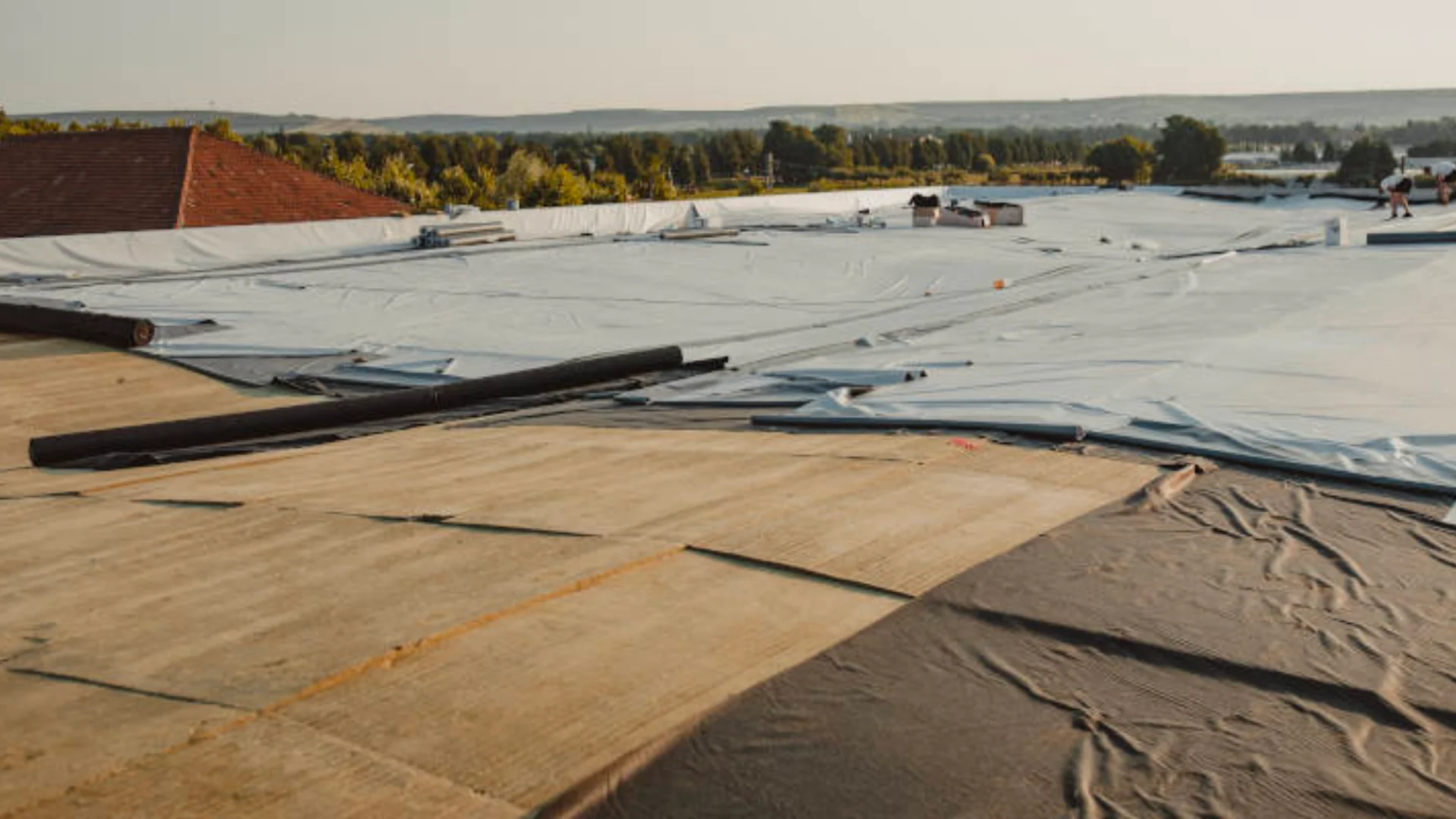
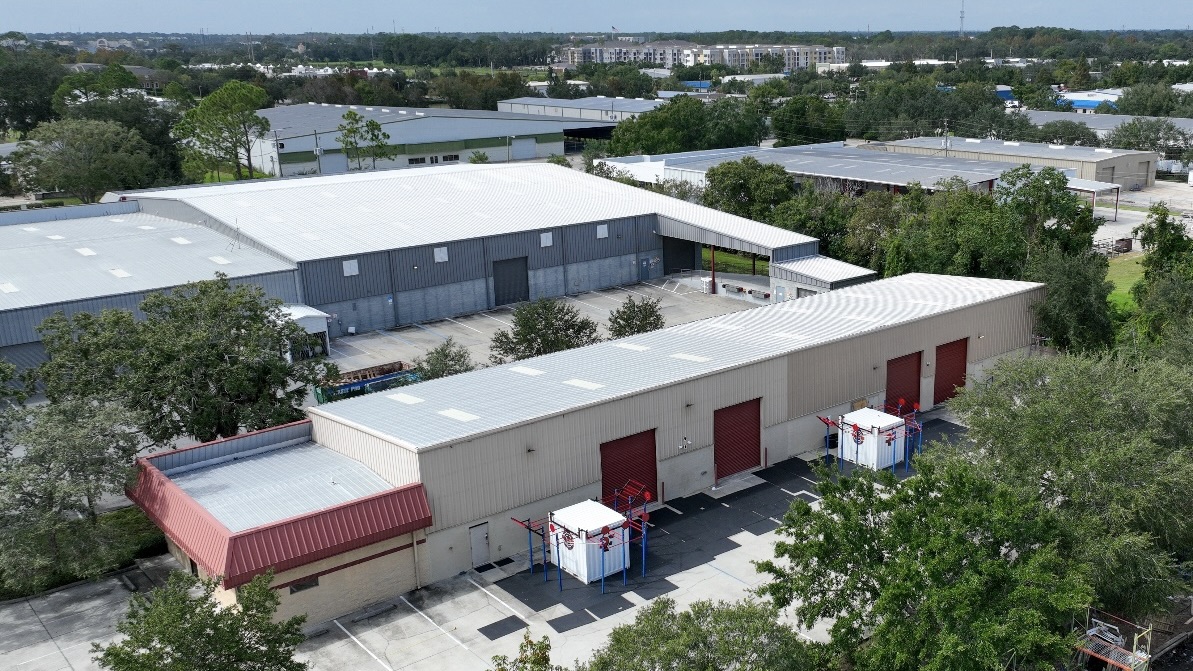
Wind exposure varies across Baltimore's commercial building stock. Older mechanically fastened systems on port-adjacent industrial buildings in Dundalk and Curtis Bay sit exposed to open wind fetch off the harbor and tend to show perimeter uplift first. Newer TPO and EPDM roofs on Harbor East and Inner Harbor properties generally carry more current perimeter fastening detail, but rooftop mechanical equipment and taller adjacent structures can still create localized wind funneling that a standard inspection might miss.