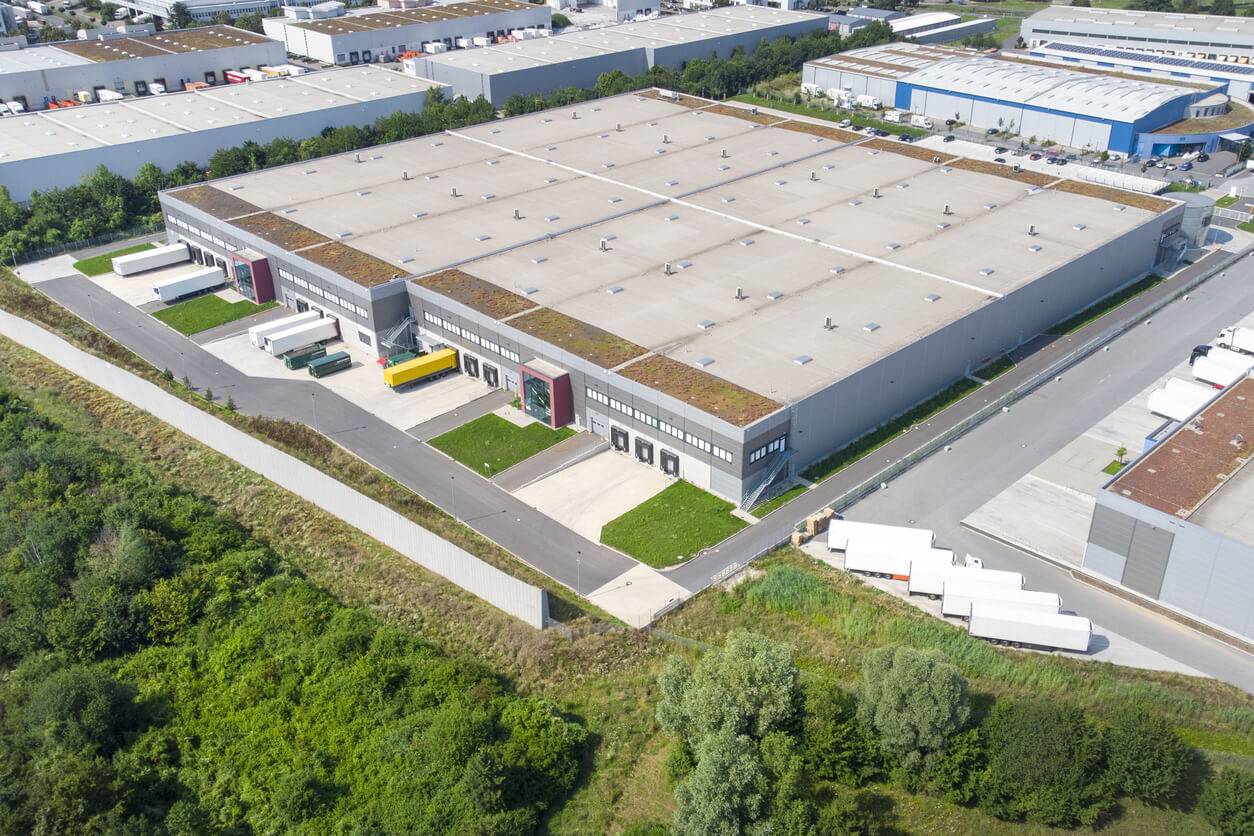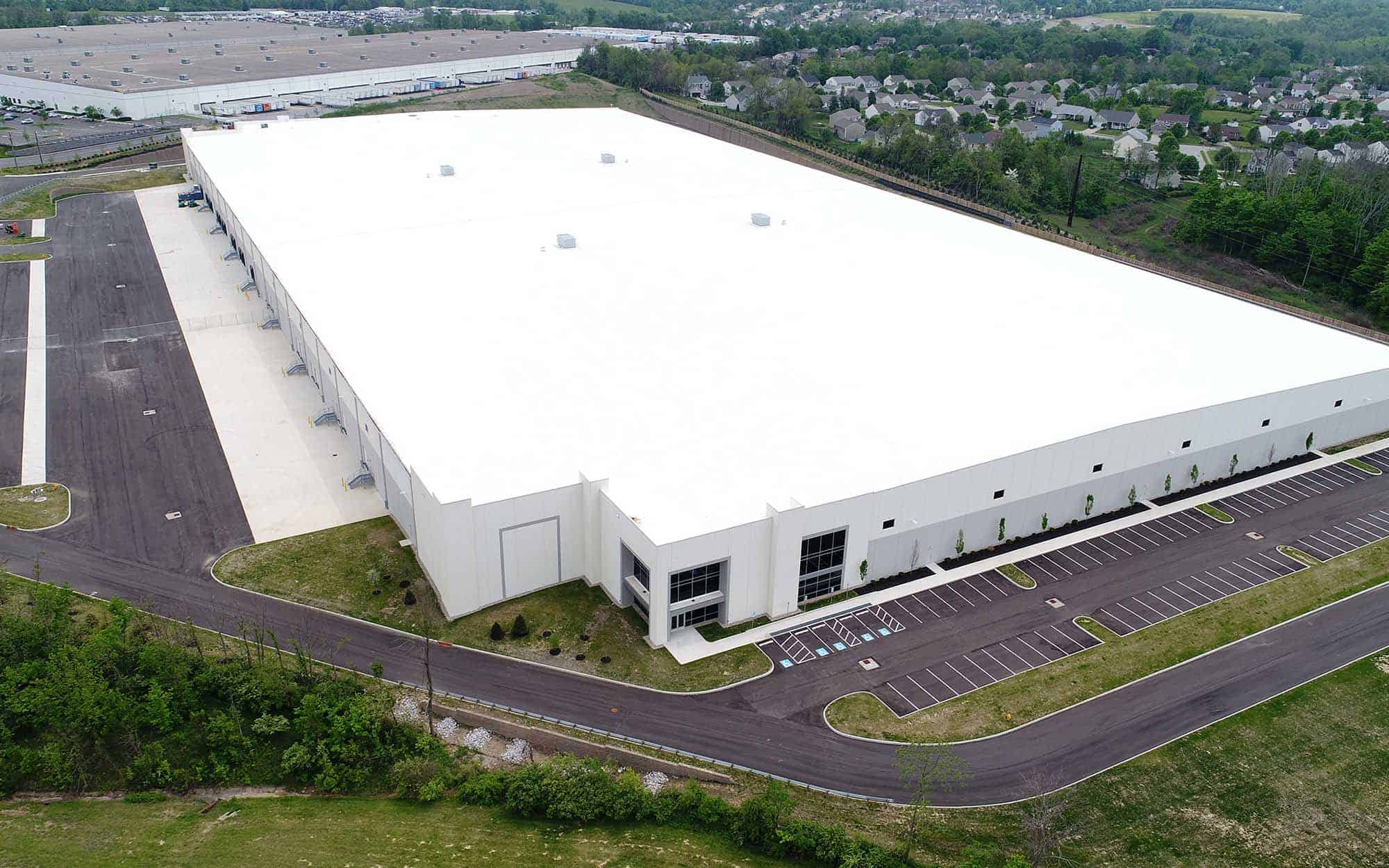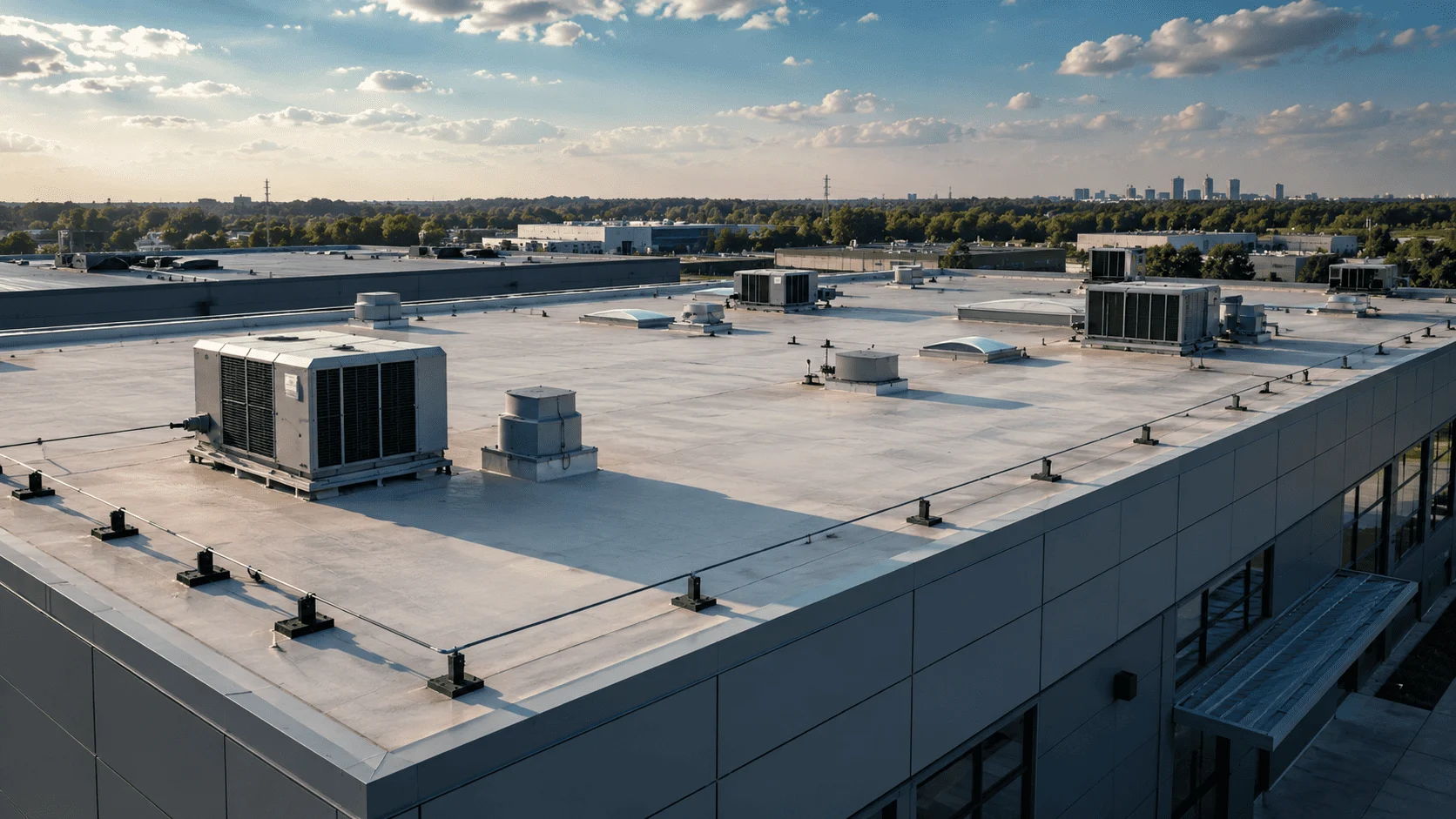
Sports & Recreation Facility Roofing starts with the actual roof condition.
Recreation buildings combine two of the hardest things a roof can be asked to do: span a long distance with nothing underneath, and shrug off relentless interior humidity. A gymnasium or arena floor is a wide clear span where the deck flexes and the wind uplift has nothing to grab onto, and an attached natatorium or locker wing fills the air below with warm, corrosive moisture. On top of that, these buildings are busiest exactly when most crews want to be home, in the evenings, on weekends, and over holidays. We scope recreation roofing around the long span, the humidity, and the programming calendar rather than treating it like a generic big-box roof.
Baltimore's recreation building stock is broad. The city and Baltimore County run dozens of community recreation centers and indoor pools, the area's YMCA branches and private athletic clubs add full-service facilities with courts and aquatics, and college and university campuses across the region operate field houses, arenas, and natatoriums. Out toward the suburbs you find ice rinks, indoor sports complexes, and tennis and turf facilities on the kind of large single-story footprints these long-span structures require. Each of these sits on a site and a schedule that shapes how the roof work has to be staged.
Long-span decks behave differently
A clear-span gym or arena roof has the same deflection and fastening challenges you get on a movie-theater deck, with high interior humidity layered on top. The structural deck carries load and movement across a long span, and the fastening has to be calculated to the real span, not a generic pattern. Steel deck at an eighty-foot span needs different fastener pull-out math than the same deck at thirty feet, and we provide the deck evaluation and fastener specification as part of every long-span scope. For these roofs we generally specify a 60-mil or 80-mil TPO mechanically attached over polyiso, with the attachment tuned to the actual deck and span.
The natatorium is the hard case
Indoor pools are the most demanding roofing condition in this whole category, and the problem is chemistry, not just moisture. Chloramine gas, formed when pool chlorine reacts with the organic matter swimmers bring in, is heavier than air and aggressively corrosive. It eats standard metal flashing, attacks aluminum edge metal, and degrades some membrane adhesives from below. A natatorium roofing spec in Baltimore has to use materials confirmed compatible with chloramine exposure, which means stainless steel or copper flashing in the exposed areas, a membrane confirmed against the manufacturer's chemical-resistance data, and adhesive formulations tested for pool-hall environments. The ventilation matters just as much: the system has to exhaust chloramine toward the exterior rather than recirculating it up against the roof envelope. Spec an ordinary roof over a pool hall and it will corrode from the inside in a fraction of its rated life.
Even without a pool, dense athletic occupancy, showers, and locker rooms push a heavy vapor load into the assembly. If the vapor retarder is missing or sits in the wrong place for Baltimore's humid climate zone, that moisture condenses inside the roof, saturates the insulation, and quietly destroys its R-value while feeding the deck. We run a moisture survey before finalizing any reroof scope on a high-humidity recreation building, because recovering over a wet or mis-specified assembly compounds the moisture problem instead of solving it.