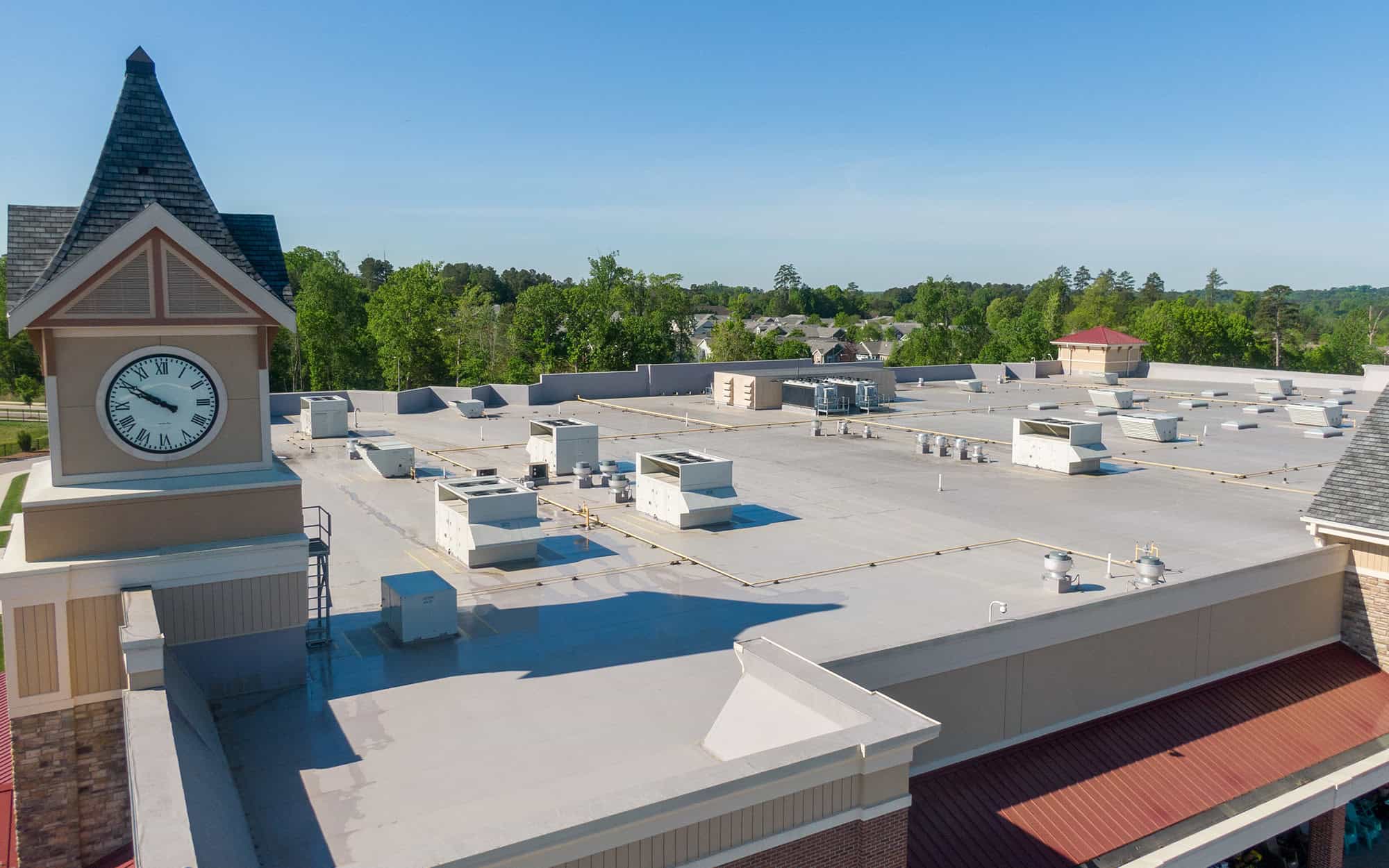
DST Roofing Services starts with the actual roof condition.
Baltimore's commercial real estate market has attracted consistent DST sponsor interest, particularly in the industrial corridors flanking I-95 and I-695, the medical office campus developments tied to Johns Hopkins and University of Maryland Medical Systems, and the NNN retail strips serving the dense Baltimore metro population. Sponsors closing on a Dundalk warehouse, a Lutherville medical office building, or a net-leased retail pad in Towson typically arrive with legal and financial teams familiar with Maryland's DST regulations but without a vetted local commercial roofing contractor in their network. Baltimore's roofing market has specific characteristics, driven by the Chesapeake Bay climate, aging commercial building stock, and a contractor market serving one of the Northeast's densest urban environments, that require a local relationship rather than a national facilities management approach.
Roof condition assessments for Baltimore DST acquisitions need to reflect the Mid-Atlantic climate's specific impact on commercial roofing. The Chesapeake Bay region experiences a full range of seasonal extremes, humid summers that create condensation and vapor-related membrane stress, winter snow and ice loading, spring nor'easters that deliver sustained wind and rain, and the occasional coastal hurricane remnant tracking up the I-95 corridor. A proper condition assessment for an offering memorandum should document not only the current membrane condition but also the drainage system's capacity for the region's rainfall events, the state of any ice dam protection on sloped sections, and the flashing integrity around the HVAC penetrations that are particularly vulnerable in Baltimore's freeze-thaw cycling.
Capital reserve modeling for Baltimore DST offerings is often complicated by the age of the commercial building stock in the market. Much of Baltimore's industrial and office inventory was constructed in the 1960s through 1980s, meaning that acquired properties may have roof systems that are either original or on their first replacement cycle. A DST syndication team acquiring a 1975-vintage warehouse in the Baltimore industrial corridor needs a contractor who can accurately assess the condition of a 40-year-old built-up roof, identify whether the substrate has moisture damage, and provide a credible estimate for replacement that accounts for the added cost of removing and disposing of older roofing materials. These cost factors are specific to older Mid-Atlantic building stock and can materially affect reserve accuracy.
Baltimore DST deals often involve properties that benefit from the metro area's proximity to Washington D.C., Philadelphia, and New York, positioning that makes Baltimore industrial assets attractive to regional distribution tenants whose leases serve as the backbone of DST investment theses. The 45-day identification window for 1031 exchange investors means DST sponsors assembling Baltimore offerings need their due diligence materials, including the roofing assessment, ready quickly. A contractor who can mobilize within 48 hours, complete an inspection of a 100,000-square-foot industrial facility, and produce a written report inside a week is directly supporting the DST team's ability to close on schedule in a competitive Mid-Atlantic acquisition environment.
Hold period roof management for Baltimore DST assets requires particular attention to the winter season, when ice loading and freeze-thaw cycling create the most persistent maintenance demands. The passive structure of the DST means that when a Baltimore industrial tenant reports water intrusion from a damaged roof drain or ice dam formation in January, the operator cannot wait for investor input, they need to act within hours. A standing service agreement that includes priority winter response, documented inspection records, and pre-season preparation work (drain clearing, flashing inspection) is the infrastructure that enables responsive hold period management from a distance.
Out-of-state DST operators in Baltimore consistently underestimate the operational complexity of managing commercial roofing in a dense urban market. Baltimore's traffic, parking restrictions, and building access requirements make roofing work logistically more complicated than suburban markets, a crew that needs to unload a boom truck on a narrow street in the Brooklyn or Canton industrial areas faces constraints that a contractor in suburban Atlanta or Phoenix would not encounter. Local contractors who know the city's permit requirements, know which inspectors cover which districts, and have established working relationships in the Baltimore market provide operational efficiency that out-of-state operators simply cannot replicate.
Baltimore DST deal flow concentrates in industrial/warehouse, medical office, and NNN retail, with the medical office category being particularly significant given Johns Hopkins, UMMC, and the dense network of affiliated clinical facilities throughout the metro. Medical office buildings in the Baltimore market tend to feature complex HVAC systems with multiple rooftop units, specialized exhaust for clinical functions, and drainage requirements that are more demanding than standard retail or industrial assets. DST operators acquiring Baltimore medical office properties need a roofing contractor with specific experience in the clinical building environment, not a general commercial roofer who occasionally works on medical properties.
Baltimore's climate risk profile is driven by the Mid-Atlantic's combination of weather extremes, a summer humidity that is more intense than most inland markets, a winter that delivers ice storms and snow events, and a shoulder season spring and fall that brings nor'easters and occasional remnant tropical systems. Out-of-market DST sponsors from the Sun Belt or Pacific Northwest often arrive with roofing assumptions calibrated to their home climate; what they encounter in Baltimore is a full-year weather cycle that stresses roofing systems from every direction. The ice damming that occurs on insufficiently insulated Baltimore industrial roofs during freeze-thaw events is one failure mode that particularly catches Sun Belt operators by surprise.